619-928-5000
  Request Service
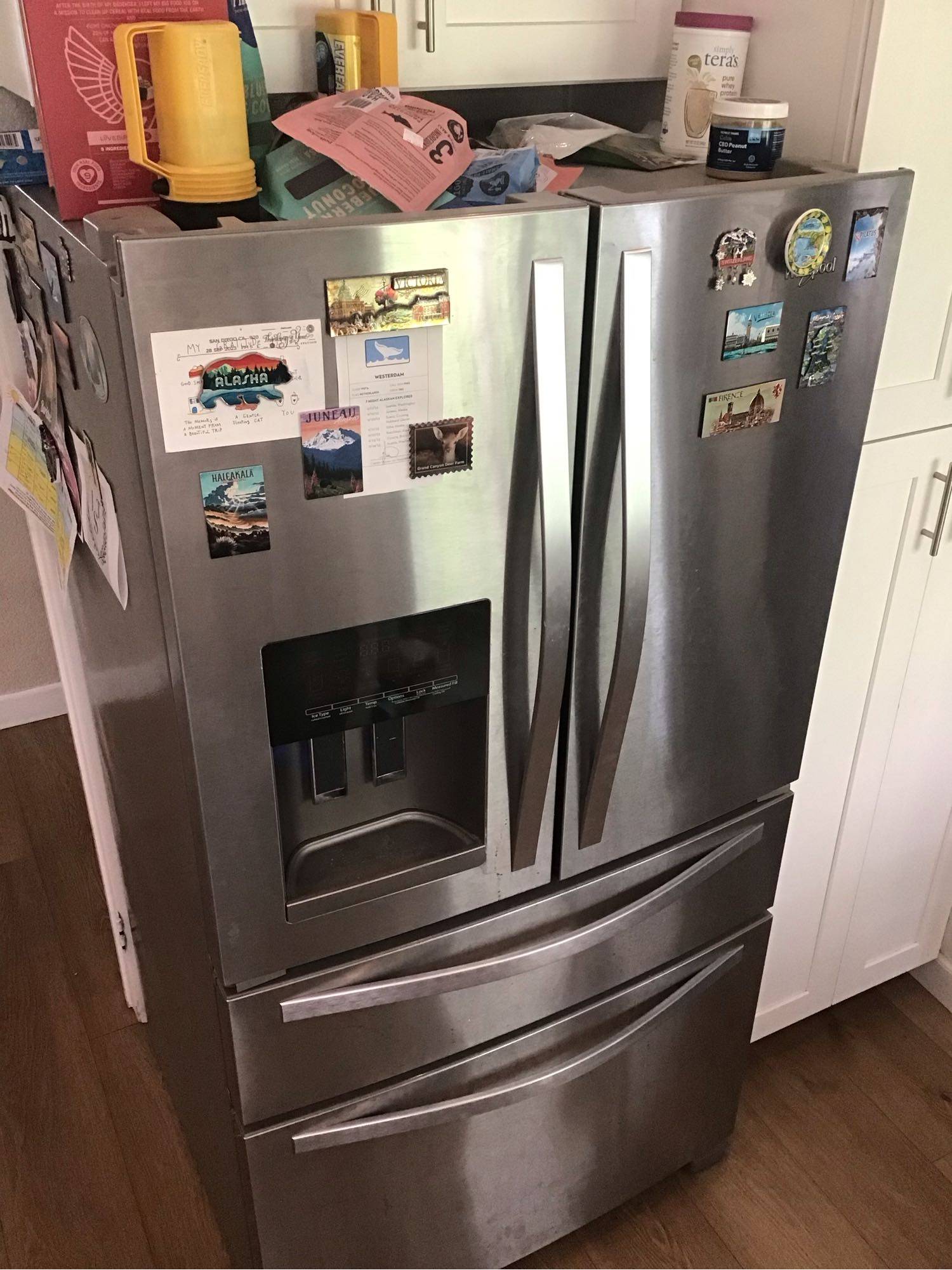
A GE refrigerator that stops cooling after a power outage may appear to have a simple restart problem, but the underlying cause can involve several electrical and refrigeration components. A brief outage, voltage surge, or repeated power interruption can affect the refrigerator’s electronic controls, compressor-start components, and other systems responsible for maintaining the correct temperature.
If the refrigerator has power but the interior is becoming warm, food can quickly become unsafe. Identifying the source of the problem early can also prevent additional damage to the compressor and other components.
What Happens to a GE Refrigerator After a Power Outage?
When electricity is interrupted, the refrigerator stops receiving power to its compressor, evaporator fan, condenser fan, lights, and electronic controls. Once power returns, the control system should normally restart the appliance and activate the cooling system.
However, refrigerators can sometimes remain warm after an outage because the compressor does not restart correctly. A voltage fluctuation during the outage or when power is restored can also damage sensitive electronic components.
Some GE models may have a short restart delay designed to protect the compressor. Therefore, the refrigerator may not begin cooling immediately after power returns. If several hours have passed and the temperature is still rising, there may be a component failure that requires diagnosis.
Possible Main Control Board Failure
The main control board coordinates many refrigerator functions. Depending on the model, it controls when the compressor and fans operate and processes information from temperature sensors.
A power surge can damage electronic components on the board. When this happens, the refrigerator may have lights and display functions while the cooling system fails to operate properly.
Common signs of a possible control board problem include:
- The refrigerator has electrical power but does not cool.
- The compressor does not receive the proper command to start.
- Fans operate inconsistently.
- The display behaves unusually or shows error codes.
- The refrigerator repeatedly attempts to start and stop.
- Temperatures continue increasing despite normal settings.
Because similar symptoms can result from other failures, replacing the control board without testing the refrigerator can lead to unnecessary expense. A technician should determine whether the board is actually sending the correct signals to the cooling components.
Possible Compressor Start Relay Failure
The compressor start relay is another component that can cause a GE refrigerator to stop cooling after an electrical interruption.
The compressor requires additional electrical assistance when starting. The start relay helps provide the appropriate connection during startup and then changes operation once the compressor is running.
If the relay is damaged, the compressor may fail to start even though the refrigerator appears to have power.
One common symptom is a clicking or buzzing sound followed by silence. The compressor may attempt to start, fail, and then try again after a short period. The refrigerator can remain warm because the compressor never reaches normal operating conditions.
A technician can test the start components and determine whether the relay, overload protector, compressor, or another electrical component is responsible.
Don’t Ignore Clicking or Repeated Restart Attempts
A refrigerator that clicks every few minutes after a power outage deserves attention. Repeated failed startup attempts can indicate a problem with the compressor’s starting circuit.
Continuing to operate the appliance under these conditions may place additional stress on the compressor. Since compressor replacement can be significantly more expensive than replacing a defective start component, early diagnosis can make a major difference.
Unusual humming, clicking, buzzing, or silence from a refrigerator that should be cooling are all useful symptoms to report to a repair technician.
Other Components That Can Cause Cooling Problems
The main control board and start relay are possible causes, but they are not the only ones.
A technician may also check:
- Compressor operation
- Compressor overload protector
- Evaporator fan motor
- Condenser fan motor
- Temperature sensors
- Wiring and electrical connections
- Thermistors
- Defrost system components
- Condenser condition
- Refrigerant system performance
For example, the compressor may actually be running while a failed evaporator fan prevents cold air from circulating through the refrigerator compartment. Likewise, excessive frost can restrict airflow and create temperature problems unrelated to the power outage itself.
This is why a complete diagnostic inspection is preferable to replacing parts based only on the refrigerator’s symptoms.
What You Can Check Safely
Before scheduling service, verify that the refrigerator is receiving power. Check whether the interior lights and display are functioning and confirm that the circuit breaker has not tripped.
Make sure the temperature controls have not been accidentally changed. Keep the refrigerator and freezer doors closed as much as possible while the appliance is warm to slow temperature increases.
Avoid repeatedly unplugging and reconnecting the refrigerator in an attempt to force the compressor to start. If the appliance is making repeated clicking sounds or the compressor becomes unusually hot, professional diagnosis is recommended.
Food safety should also be considered. If refrigerated food has been sitting at unsafe temperatures for an extended period, follow appropriate food-safety guidance rather than assuming it is still safe to consume.
When to Schedule GE Refrigerator Repair
If your GE refrigerator has power but does not resume cooling after an outage, professional troubleshooting can identify whether the problem involves the main control board, start relay, compressor, fan system, or another component.
A qualified technician can test electrical components, inspect the compressor startup circuit, evaluate cooling performance, and determine which repair is appropriate for your specific GE model.
If your refrigerator stopped cooling after a power outage, HOME APPLIANCE SERVICE CENTER can help diagnose the problem and determine the necessary repair. Contact HOME APPLIANCE SERVICE CENTER to schedule professional GE refrigerator service and get your appliance cooling properly again.
Contact us