619-928-5000
 Request Service
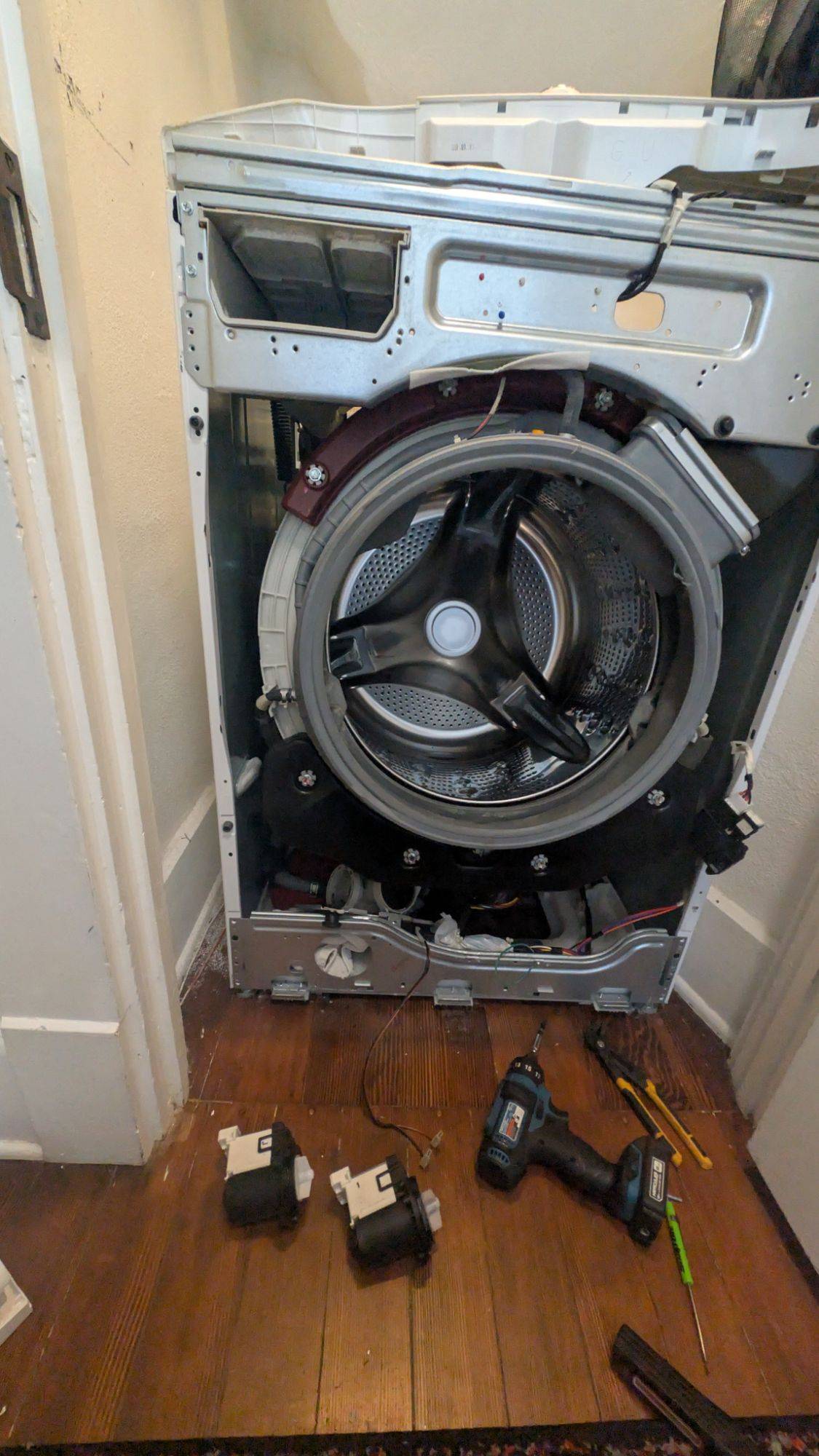
An LG washing machine that leaks water around the door during a high-speed spin cycle may have a problem with its door seal or internal drum suspension system. While a small amount of moisture around the door can sometimes result from detergent residue or improper loading, visible water escaping during operation is not normal. This issue should be addressed promptly to prevent water damage to the floor, electrical components, and surrounding appliances.
One of the most common reasons for this problem is a damaged door gasket. The rubber door seal, also known as a door boot, creates a watertight connection between the washing machine drum and the front panel. It prevents water from escaping while the machine fills, washes, rinses, and spins. Over time, the gasket can become worn, stretched, cracked, or torn. Small holes and damaged sections may not cause noticeable leaks during regular washing but can allow water to escape when the drum rotates at high speed.
Excessive drum movement is another possible cause of door seal leaks. During the spin cycle, an LG washing machine rotates the drum rapidly to remove excess water from clothing. The drum is supported by suspension components designed to absorb vibration and keep it properly positioned. If shock absorbers, suspension springs, or other supporting parts become worn or damaged, the drum may move more than it should. This excessive movement can cause the drum to press against the rubber gasket, creating gaps or allowing water to pass through the door seal.
A damaged gasket may also develop problems because of repeated contact with clothing, zippers, buttons, or other sharp objects. Small items such as coins, hairpins, and metal accessories can become trapped between the drum and the seal. Over time, friction and pressure can damage the rubber surface. Even a relatively small tear can become a significant source of leakage when the washing machine reaches its highest spin speed.
Another factor worth checking is whether the washing machine is properly balanced. An overloaded drum or an uneven distribution of laundry can create excessive vibration during spinning. Heavy items such as towels, blankets, and bedding may collect on one side of the drum, causing the machine to shake more than usual. Although an unbalanced load does not necessarily mean that a component has failed, repeated vibration can place additional stress on the door gasket and suspension system.
The condition of the shock absorbers is particularly important when investigating excessive drum movement. These components help control the drum’s motion and prevent strong vibrations during high-speed spinning. When shock absorbers lose their effectiveness, the drum may bounce excessively, produce loud banging noises, or move noticeably inside the cabinet. If the washing machine also leaks around the door, worn suspension components should be inspected alongside the gasket.
In some cases, the problem may involve damaged suspension springs or worn drum bearings. Suspension springs help hold the tub in its correct position, while bearings allow the drum to rotate smoothly. When these components become worn, the washing machine may develop unusual movement, grinding sounds, or persistent vibration. A technician should determine whether the problem is limited to the door seal or involves deeper mechanical damage.
Homeowners can perform a few basic checks before arranging professional service. First, stop the washing machine and disconnect it from the power supply if it is safe to do so. Once the machine is completely stopped, inspect the visible rubber gasket for cracks, cuts, deformation, or trapped objects. Check the drum for signs of excessive movement and make sure the washing machine is standing level on a stable surface. Avoid running another high-speed spin cycle if water continues to escape or the drum moves violently.
It is also important not to ignore repeated leakage simply because the washing machine still completes its cycles. Water escaping from the front door can reach electrical connections, damage flooring, and create conditions for mold and unpleasant odors. Continuing to operate the appliance with a damaged gasket or faulty suspension system may also lead to more expensive repairs.
Professional diagnosis is the best way to identify the exact source of the problem. A qualified appliance repair technician can inspect the door gasket, suspension springs, shock absorbers, drum bearings, and mounting components. If the rubber seal is damaged, replacement may restore the watertight connection. If excessive drum movement is responsible, the technician may need to repair or replace worn suspension components to prevent the new gasket from becoming damaged again.
At HOME APPLIANCE SERVICE CENTER, we provide professional washing machine diagnostics and repair services. Our technicians can identify why your LG washing machine leaks during high-speed spinning and recommend the appropriate repair solution. Whether the problem involves a damaged door gasket, worn shock absorbers, or excessive drum movement, addressing it early can help prevent further damage and restore reliable operation.
Don’t let a small leak turn into a major appliance problem. Contact HOME APPLIANCE SERVICE CENTER today to schedule professional LG washing machine repair and get your appliance working properly again.
Contact us