619-928-5000
  Request Service
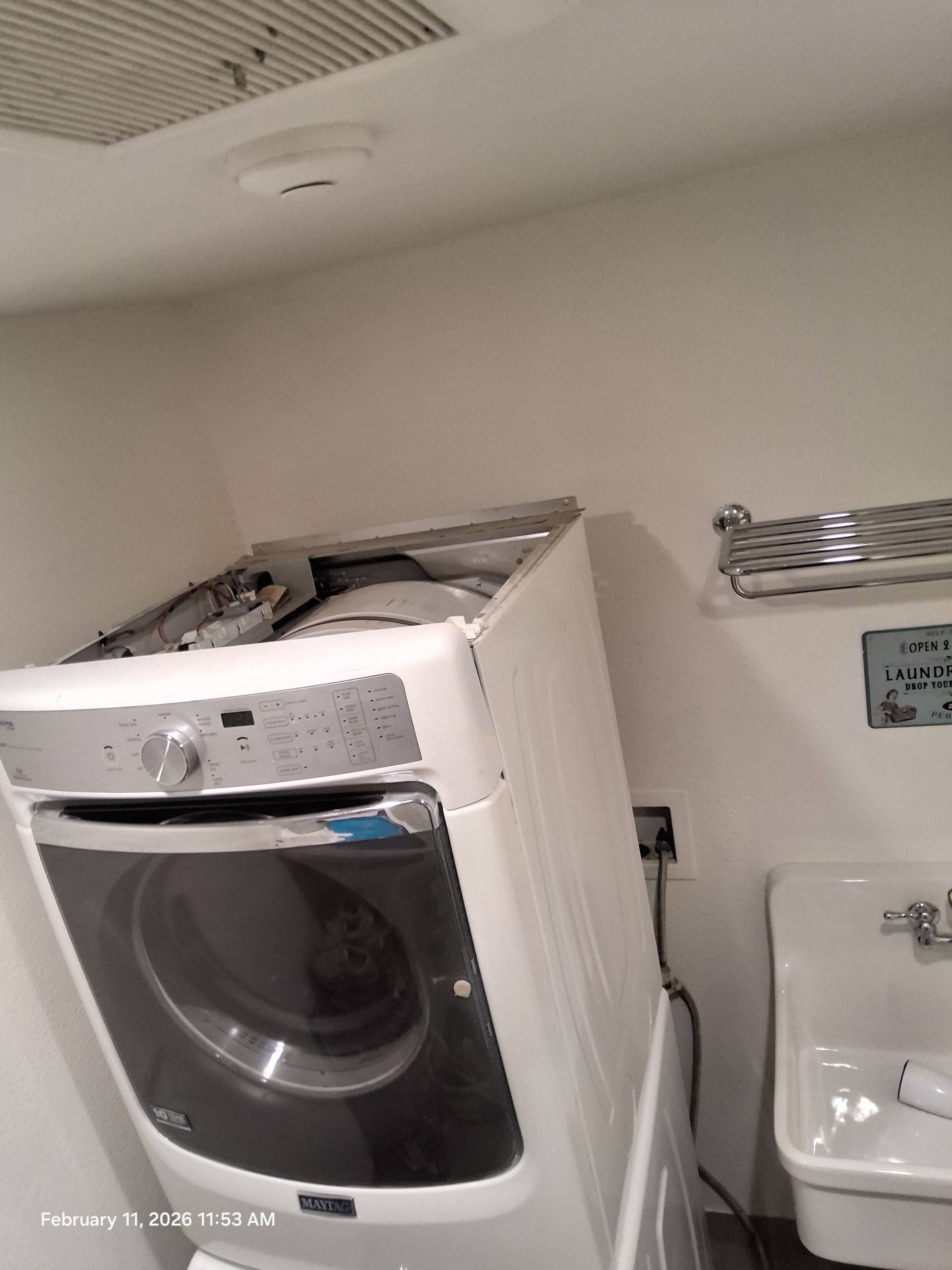
A washing machine that suddenly stops spinning during a cycle can leave clothes soaked and unfinished. In many cases, the problem appears only when heavier or uneven loads are placed inside the drum. Towels, blankets, jeans, or mixed fabrics often trigger the issue. While this behavior may seem random, it usually points to suspension wear, balance sensor failure, or drum stabilization problems.
Modern washing machines are designed to protect internal components during high-speed spin cycles. If the appliance detects excessive vibration or imbalance, it may reduce the spin speed, pause the cycle, or stop spinning completely. This safety feature prevents damage to the drum, bearings, motor, and cabinet. However, when the machine repeatedly refuses to spin even with properly arranged laundry, a mechanical or electronic fault may already be developing.
Why Load Balance Matters
During the spin cycle, the drum rotates at very high speeds to remove water from clothing. If the weight inside the drum is distributed unevenly, the washer can begin shaking violently. To avoid internal damage, the control system monitors drum movement and vibration levels.
Normally, the washer corrects small imbalances automatically by slowing down and redistributing the load. But if the machine struggles with balance every time, the issue may no longer be caused by the laundry itself.
Common symptoms include:
- Washer stops before the spin cycle finishes
- Clothes remain excessively wet
- Drum bangs against the cabinet
- Washer repeatedly attempts to rebalance
- Error codes related to imbalance or vibration
- Excessive shaking during spin
These symptoms often indicate suspension wear or sensor-related failures.
Worn Suspension Rods or Shock Absorbers
Top-load and front-load washing machines use suspension systems to stabilize the drum during operation. Depending on the model, this system may include suspension rods, springs, dampers, or shock absorbers.
Over time, these components weaken from constant movement and vibration. Once they lose tension or damping ability, the drum can move too freely during spin cycles. The control board then detects unsafe movement and interrupts the spin process.
Signs of suspension problems include:
- Washer leans excessively during spin
- Loud thumping sounds
- Drum movement feels loose when pushed by hand
- Increased vibration over time
- Washer “walks” across the floor
Suspension wear usually develops gradually. Many homeowners notice stronger vibrations for weeks or months before the machine begins stopping completely.
Faulty Balance Sensor
Most modern washers include balance detection systems that monitor drum stability. Some models use vibration sensors, while others calculate balance through motor feedback and drum rotation data.
If the balance sensor becomes inaccurate or fails entirely, the washer may incorrectly interpret normal movement as dangerous imbalance. As a result, the machine may cancel the spin cycle even when the load is distributed correctly.
Sensor-related issues may cause:
- Random spin interruptions
- Frequent imbalance warnings
- Inconsistent spin performance
- Washer spins normally sometimes but fails on other loads
- No visible excessive vibration despite cycle cancellation
Electronic sensor failures are difficult to diagnose without professional testing equipment because the symptoms often resemble mechanical issues.
Uneven Flooring Can Make the Problem Worse
In some cases, the washer itself may not be fully defective. An uneven floor or improperly adjusted leveling feet can amplify vibration during spin cycles.
Even slight tilting changes how weight shifts inside the drum. Over time, this additional stress can accelerate suspension wear and trigger balance errors more frequently.
A properly installed washer should sit firmly on all four feet without rocking. Basement floors, older tile surfaces, and flexible wood flooring commonly contribute to instability problems.
Overloading and Mixed Fabrics
Large or mixed loads can also create imbalance conditions. Heavy items absorb more water and gather on one side of the drum during spinning. Washing a single blanket or combining towels with lightweight clothing often creates uneven weight distribution.
While occasional imbalance is normal, the washer should still recover and complete the cycle. If minor load variations consistently stop spinning, underlying component wear is likely involved.
To reduce strain on the machine:
- Avoid overloading the drum
- Wash bulky items in balanced pairs
- Separate heavy and lightweight fabrics
- Distribute laundry evenly before starting
- Use appropriate cycle settings
These practices help minimize vibration and reduce long-term stress on suspension components.
Why Ignoring the Issue Can Lead to Larger Repairs
A washer that repeatedly shakes or stops spinning places extra strain on multiple internal parts. Continued operation under unstable conditions may damage:
- Drum bearings
- Drive motor
- Control board
- Suspension mounts
- Door lock assembly
- Drain system components
What begins as a suspension repair can eventually become a major mechanical failure if excessive vibration continues unchecked.
In some cases, customers continue restarting cycles manually until the machine eventually spins. While this may temporarily finish the laundry, it increases stress on already weakened parts.
Professional Diagnosis Is Important
Because imbalance problems can involve both mechanical and electronic systems, proper diagnosis is essential. Replacing suspension rods alone may not solve the issue if the balance sensor or control board is malfunctioning. Likewise, sensor replacement will not correct worn dampers or structural instability.
A trained technician can inspect:
- Suspension condition
- Drum alignment
- Shock absorbers and springs
- Sensor readings
- Motor behavior
- Control board responses
- Installation stability
Accurate diagnosis helps avoid unnecessary part replacement and restores proper spinning performance faster.
Schedule Service Before the Problem Gets Worse
If your washing machine stops spinning whenever the load becomes uneven, the appliance is signaling that something is no longer functioning correctly. Early repairs can prevent additional damage, reduce vibration stress, and extend the life of the washer.
HOME APPLIANCE SERVICE CENTER provides professional washing machine diagnostics and repair services for suspension problems, balance sensor failures, vibration issues, and spin cycle malfunctions. Experienced technicians can identify the source of the problem and restore reliable washer performance before more expensive repairs become necessary.
Contact HOME APPLIANCE SERVICE CENTER today to schedule expert washing machine repair service.
Contact us